At the Foot of the Hill
As a boy, I knew my grandfather’s greyhounds through a story my mother used to tell me. She would hold them at the foot of a hill on the outskirts of Madrid while her father climbed. The dogs strained at their leads, trembling to be off. When he called from the top, she let them go. The day I drew Nora during the experiment, I also asked for two greyhounds that looked alike. I wanted the female to be orange. For me, the pair that would one day share our home came into being there and then.
A year after we lost Nora, Ángeles and I went back to the shelter where we had adopted her. We went looking for a female and came home with Cinco, a five-year-old brindle male. Whenever the other dogs started to play, he took shelter between my legs. Then one day, at a park by Madrid’s Casa de Campo, a russet-coloured greyhound came in. Her name was Eevee. Cinco ran off to play with her. I’d never seen him play like that.
A month later, Eevee’s owner rang to say he could no longer keep her. We agreed to take her for the weekend and see how it went. That first night, as the dogs sought each other out and settled down together, I looked at Ángeles. She nodded. Eevee stayed. There in front of me was the pair I had asked for all those years ago.
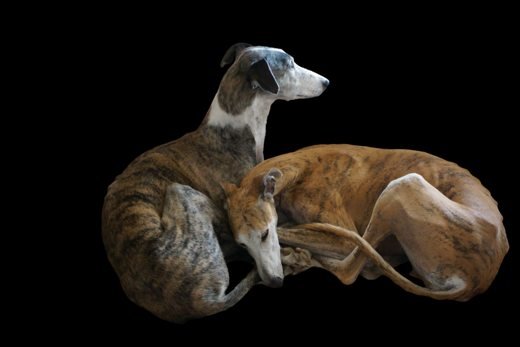
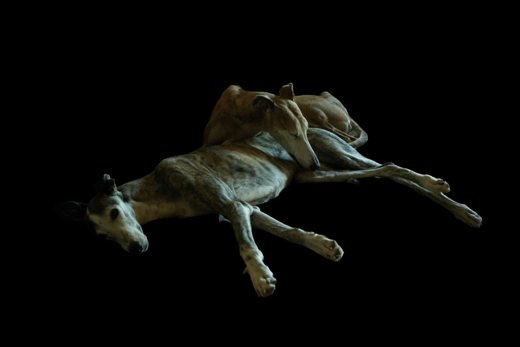
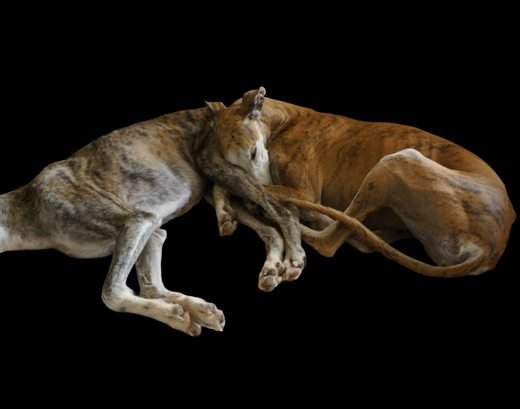
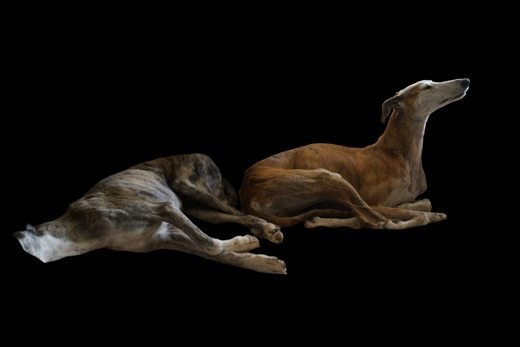
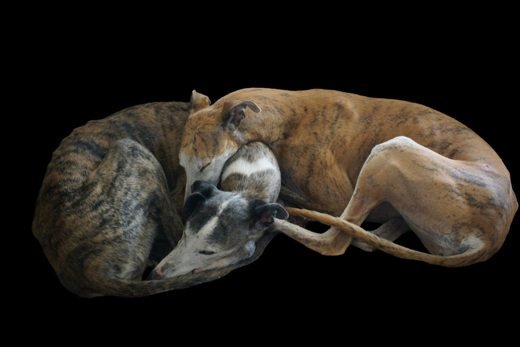
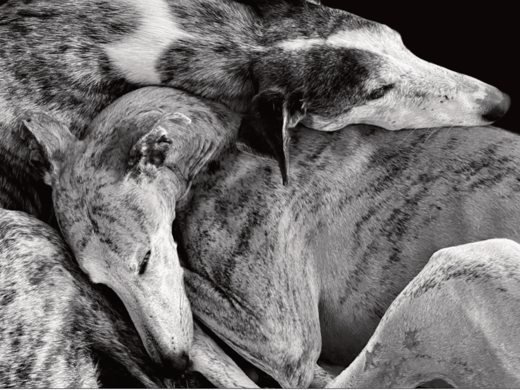
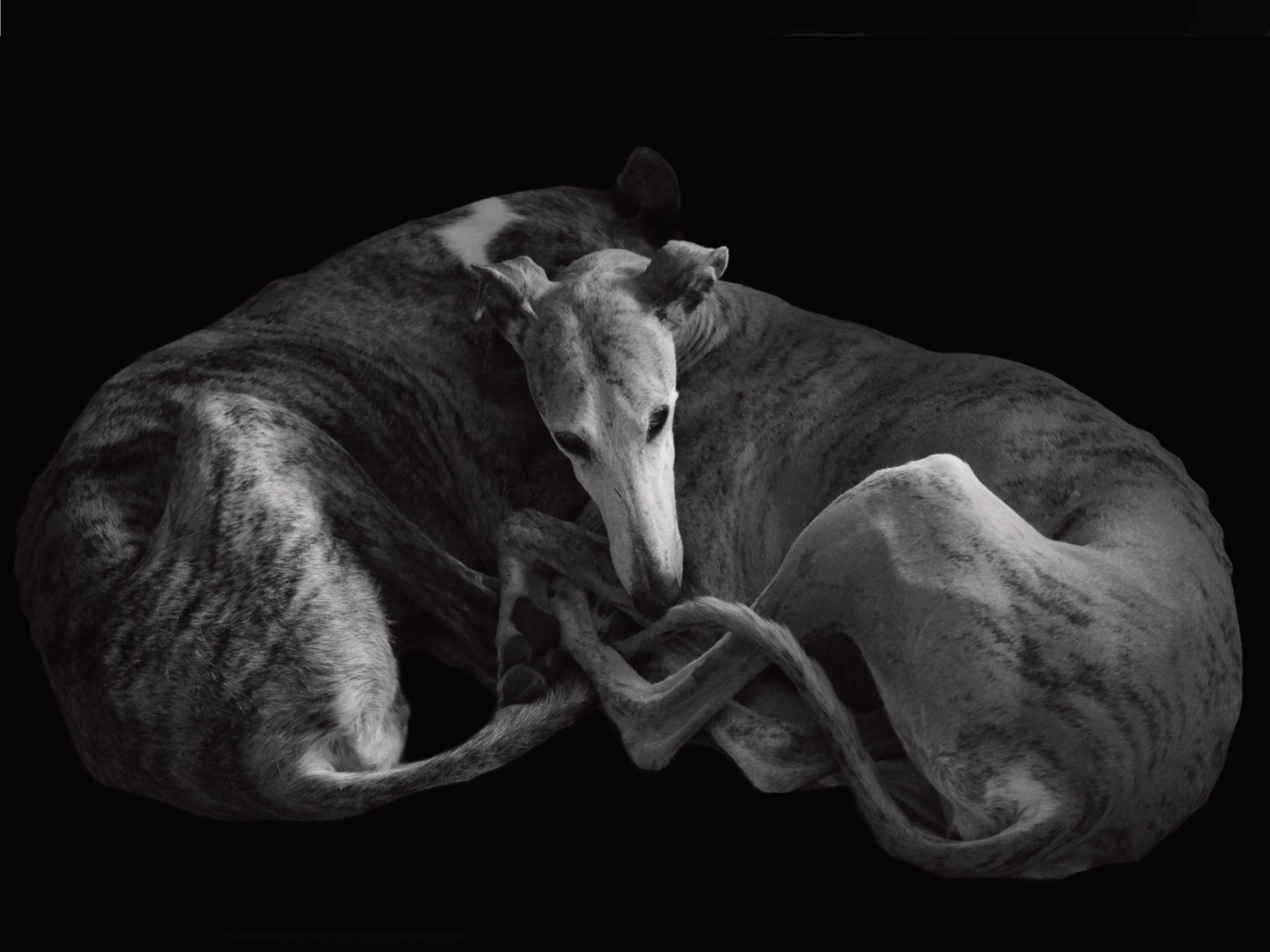
I began photographing them on our sofa in natural light, just as they lay. In Greyhounds II, I made the background black so the eye would come to rest where one dog lays its head and the other bears its weight. I wanted to keep something of that trust. And seeing them so still in the photograph, I could see my mother’s greyhounds again, racing up the hill.